Coffee Shrub
Search
Compact profile of rustic sugars, lingering bittersweets, dried fruit, along with thick body that ensures a long aftertaste. Notes of pomegranate syrup, fig, winey apricot, and high % cacao dark chocolate. City+ to Full City+.
This honey process lot from Sonia Janamejoy brews a cup densely packed with flavors of rustic sugars, lingering bittersweets, and dried fruit, along with thick body ensures a long, complex aftertaste. The fragrance shows a scent of date sugar and molasses, with dried tamarind and berry. The wet aroma brought out an intense cooked sugar sweetness, molasses cookie, with suggestions of berry fruit reduction. We enjoyed the fruited-cocoa aspects in both medium and darker roast levels, and I found City+ brought out the best of both worlds. There's a mix of dark fruits and berries, and bittersweet substrate of high % cacao dark chocolate. Fruited flavors show notes of pomegranate syrup, fresh fig, and a hint of apricot wine, and bring a moderate acidic impression too. Body is quite thick, even in light roasts, and the finish is accented by sticky prune. Very nice complexity.
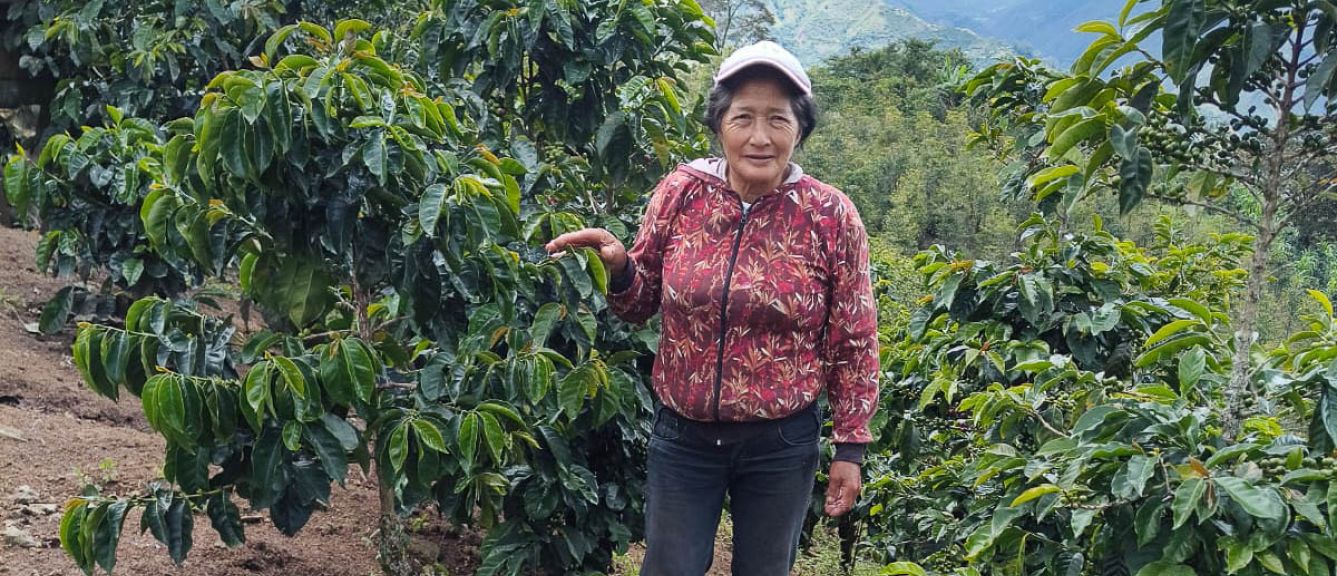
This microlot honey coffee come from Sonia Janamejoy in Aponte, Nariño. Her farm, La Loma, is located near the town center, and is planted in Caturra, Variedad Colombia and Castillo. Her farm is just 2 hectares, and just she and her two children are able to manage the harvest themselves. The people of Aponte are of Inga decent, a pre-Colombian ethnic group related to the Incas, their native tongue being Inga Kichwa. Aponte is located in a misty páramo region of very high altitude. The farmers in this growing region grow mainly Caturra, Castillo, and Variedad Colombia cultivars, the latter being disease resistant hybrids known for high production. The remote location and far reach from the Colombian government has made it a desirable area for growing illegal poppy crops too. But outside interest in coffee from this area and the competitive prices being paid have made coffee an attractive alternative. Sonia's farm sits at 1900 meters above sea level, and he honey processes all of his coffee. An interesting aspect about coffee from this region is that honey processing is the standard. Each producer handles their own processing at home too, which can mean quite a bit of flavor variation from one neighbor to the next. After pulping the coffee, she lets the wet seeds ferment for 2 days in a tank without water before moving to the drying beds. Honey process coffees produce a lot more chaff that wet process during roasting, which is something to keep an eye on. If your roaster doesn't have a chaff collector, or the recepticle is small (like Fresh Roast), you should definitely vacuum between roasts.
| Region | La Loma, Aponte, Tablon de Gomez, Nariño |
|---|---|
| Processing | Honey Process |
| Drying Method | Covered Sun-Dried |
| Arrival date | Nov 2025 |
| Lot size | 11 |
| Bag size | 70 KG |
| Packaging | GrainPro Liner |
| Farm Gate | Yes |
| Cultivar Detail | Caturra, Variedad Colombia |
| Grade | Excelso 15+ |
| Appearance | .6 d/300gr, 15-17 Screen |
| Roast Recommendations | City+ to Full City+ |
| Type | Farm Gate |